What happens when …
... we build towns that put
people and nature first?
Building better towns for people and nature
Listen to this feature
George Clarke believes in the power of planning. Revisiting the utopian, nature-led new town of his youth, the architect suggests how we might build better neighbourhoods for everyone
By Vincent Crump
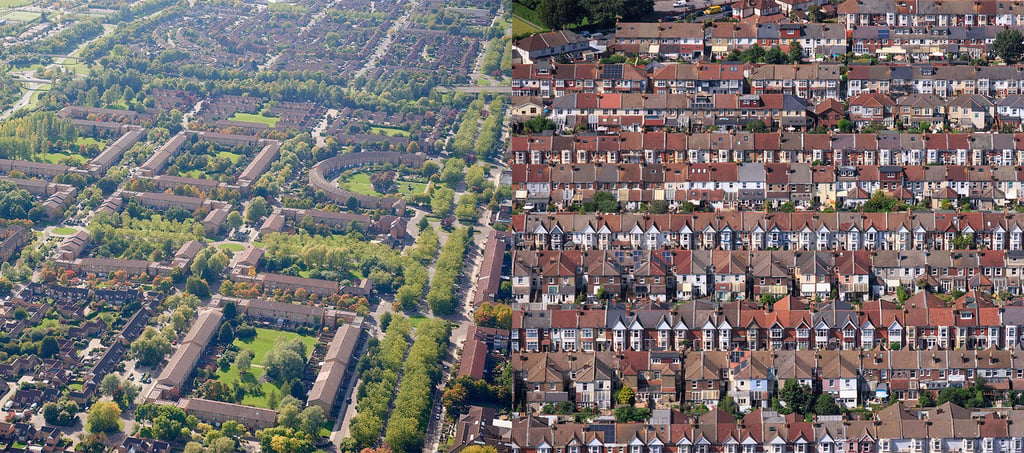
Above Compact terraces in Portsmouth, Hampshire (right), contrasting with Milton Keynes, Bucks. (left), built as a green new town in 1967
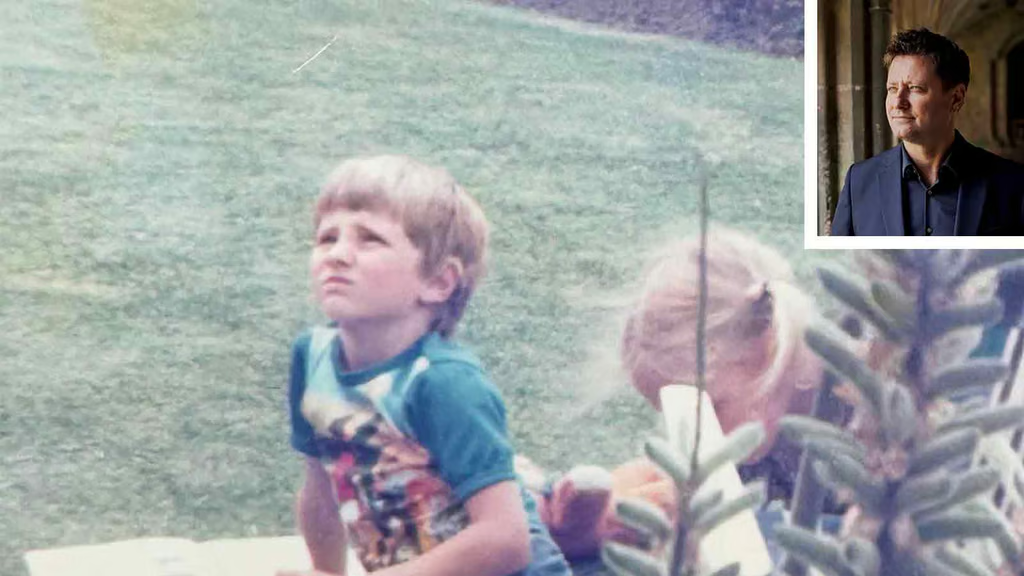
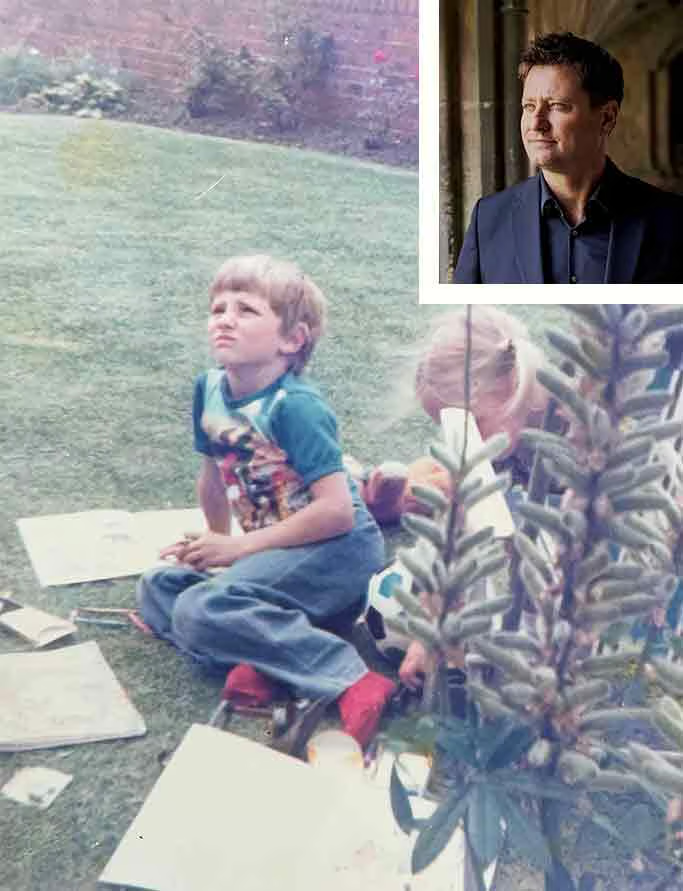
Above George Clarke grew up in a council house in another new town: Washington, Tyne and Wear, where the homes were spacious with lots of green space
Washington was revolutionary in its day – a utopia for my parents moving in from the cramped terraces of inner-city Sunderland.
ashington was revolutionary in its day – a utopia for my parents moving in from the cramped terraces of inner-city Sunderland.
In less than a decade, a team of designers and landscape architects created this state-of-the-art town from scratch. They built housing for 50,000 people, with all the transport, parks, shops and doctors’ surgeries they would need. It was a lovely place to live.’
George Clarke has risen to become one of Britain’s best-known architects. On a string of hit shows for Channel 4, he works wonders transforming everyday homes into attractive, eco-friendly living spaces, driven by his abiding belief that good design can change lives for the better. Much of this stems from his early years growing up in a council house in Washington, a 1960s new town in Tyne and Wear.
‘The town inspired me as an architect and shaped me as a person,’ says George, who is also a National Trust ambassador. ‘The vision behind the place was radical, and the town planning was deeply humane. Our new estates were designed as a series of villages, each with its own primary school, corner shop, pub and village hall.’ His walk to school was just over a kilometre and didn’t involve a single road crossing. ‘I picked up friends along the way – we all walked.’
The homes were spacious, with plenty of green space. ‘My mum’s house is two storeys, with four bedrooms and a front and back garden. All the houses look out on a courtyard square, with the cars parked round the back, away from where we played. The sense of community was off the scale. Everything was so lush and green too – they did a great job with the landscaping.’
As the Government pledges 1.5 million new homes to address the UK’s housing crisis, George’s personal perspective on what makes a successful urban neighbourhood couldn’t be more relevant. With 21st-century ‘new towns’ planned for seven sites around the UK, the urgent demand for housing arrives against a backdrop of climate change and nature loss. This is often compounded by political rhetoric that paints the environment as a ‘blocker’ to development – a narrative that conservation organisations like the Trust are fighting hard to contest. ‘We think it’s false to say you can have growth or nature but not both,’ says Georgina Holmes-Skelton, the Trust’s Head of Public Policy. ‘Green space isn’t a luxury – it’s a human need, benefiting physical and mental health.’
In Washington, it felt like greenery and wildlife were all around us
Biodiversity has proved to be fundamental to a nation’s long-term economic prosperity. Research from the Green Finance Institute suggests that damage to the natural environment could cause a 12 per cent loss to UK GDP – a steeper decline than that caused by the pandemic. While 80 per cent of British people live within 15 minutes of a decent-sized green space, this figure plummets to as low as 1 per cent in the country’s most disadvantaged, urban areas. As a recent Trust-backed report warned, many first-time buyers are effectively being forced into ‘nature deserts’, a symptom of a long-term failure by governments to create greener, healthier new-build developments.
George echoes the Trust’s call for nature to be ‘planned in’ to housing developments before a spade hits the soil, prioritising the preservation of existing habitats wherever possible. ‘In Washington, it felt like greenery and wildlife were all around us,’ he recalls. ‘It was integrated into the original design. Ponds and waterways ran through the town, where we’d find tadpoles, mice and voles. There were plenty of birds too, thanks to the hundreds of thousands of saplings planted there. Those trees have since matured over the years – if you look at Washington on aerial imagery today, it looks like a forest.’
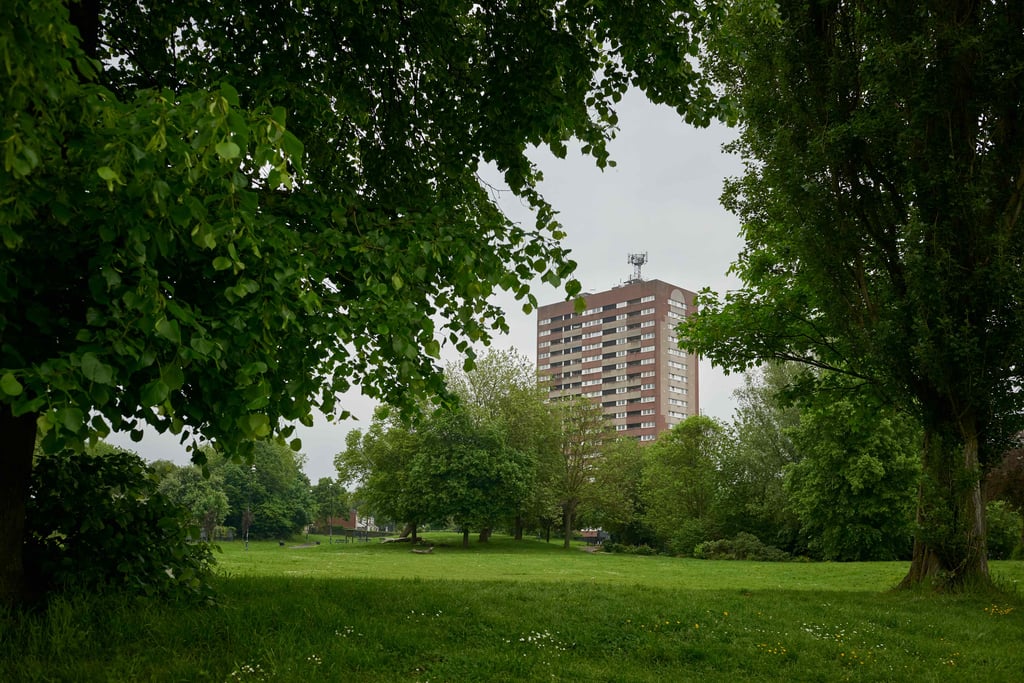
Above A park in the Nechells suburb of Birmingham provides access to green space and nature
George sees parallels between today’s generation of young adults, shoehorned into pricey private rentals, and that of his parents, rescued by the new towns from the decaying industrial slums of post-war UK. He is unimpressed by the housebuilding policy of recent decades, with its piecemeal approach and legacy of bland edge-of-town estates, designed mainly to maximise profit. ‘These places look like a handful of Monopoly houses have been thrown down willy-nilly, devoid of the vibrant social amenities that made Washington a success. Nature is often an afterthought, a token square of grass rather than an integrated part of the landscape.’
George believes house buyers deserve more for their money, and there’s a lack of guidance for the big housebuilders. ‘They don’t invest in suitable architects, and local authorities don’t have a coherent plan.’
He points to the Duchy of Cornwall’s housing developments at Poundbury in Dorset and Nansledan in Cornwall, as back-to-the-future blueprints for a better solution. Both developments are founded on New Urbanism, an American movement that promotes environmentally friendly habits by creating walkable districts with a range of housing, an onus on bikes and buses over cars, and a commitment to jobs on the doorstep.
‘They rediscover some of the principles of good urban planning that we’ve lost in this country,’ George says. ‘Nansledan is a simple village model with pedestrianised avenues, places for people to come together, and beautiful parks. Not every building is to my taste, but who wouldn’t love to live in a well-built Georgian home? There’s a reason that style of architecture has stood the test of time.’
Of course, the monarch can’t bankroll every modern mass housing project – and the green new settlements of the 1960s were pump-primed by major public sector investment. Washington Development Corporation was mandated to buy land at agricultural prices, which made for healthy profits as soon as it was developed. In the past, major projects like Milton Keynes were self-sustaining, funded by endowments that still maintain the city’s forests, lakes and parks to this day, with green space occupying about 25 per cent of the city.
In an age of tightening public purse strings, and with the Government demanding an ‘ambitious density’ of properties built on each plot of ground, Georgina accepts that most new housing will continue to come from smaller-scale private schemes. ‘But even modest pockets of nature can be meaningful if they link together well, creating green corridors for the wellbeing of people and wildlife,’ she says.
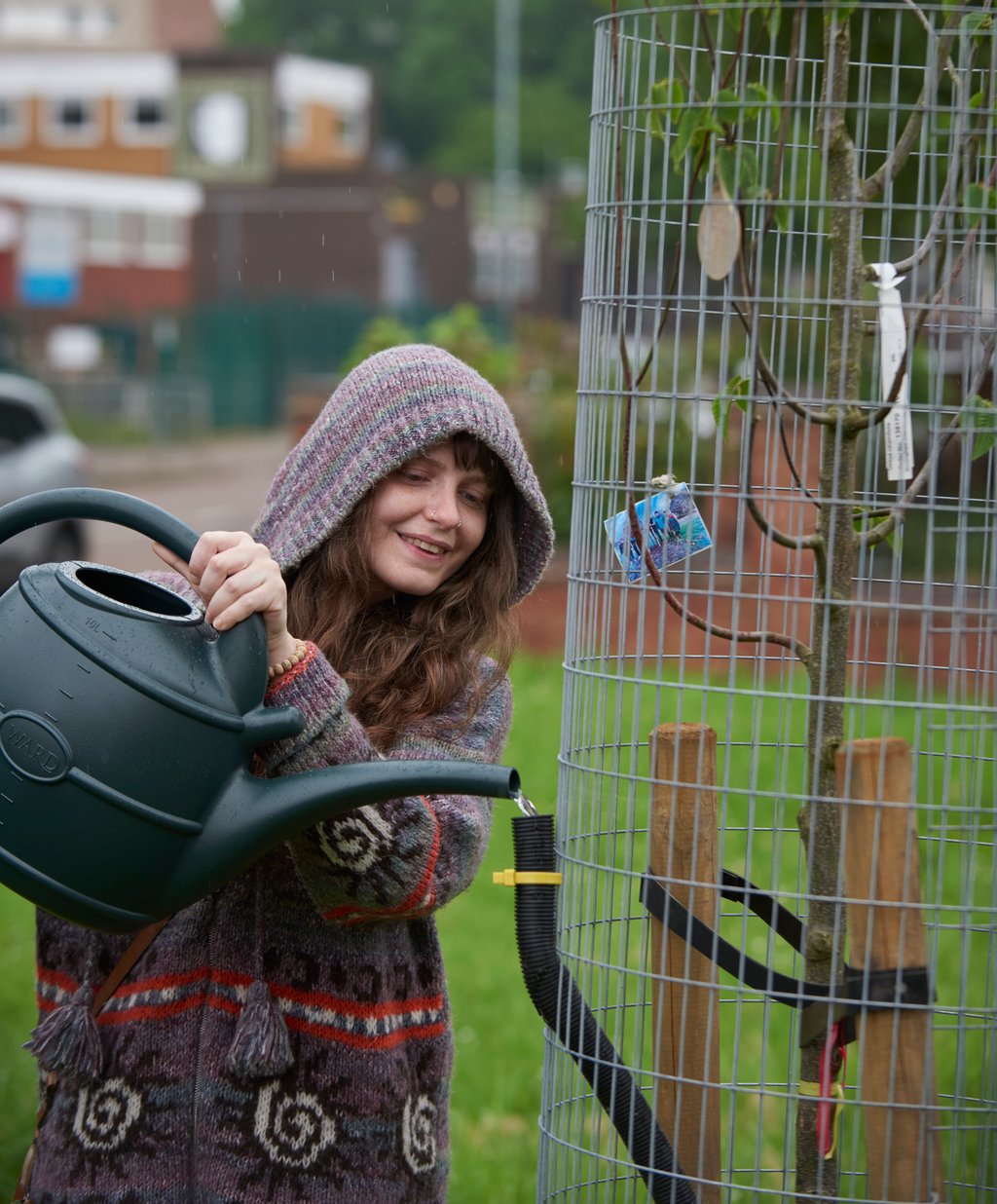
Above Watering a newly planted tree at Nechells suburb, Birmingham
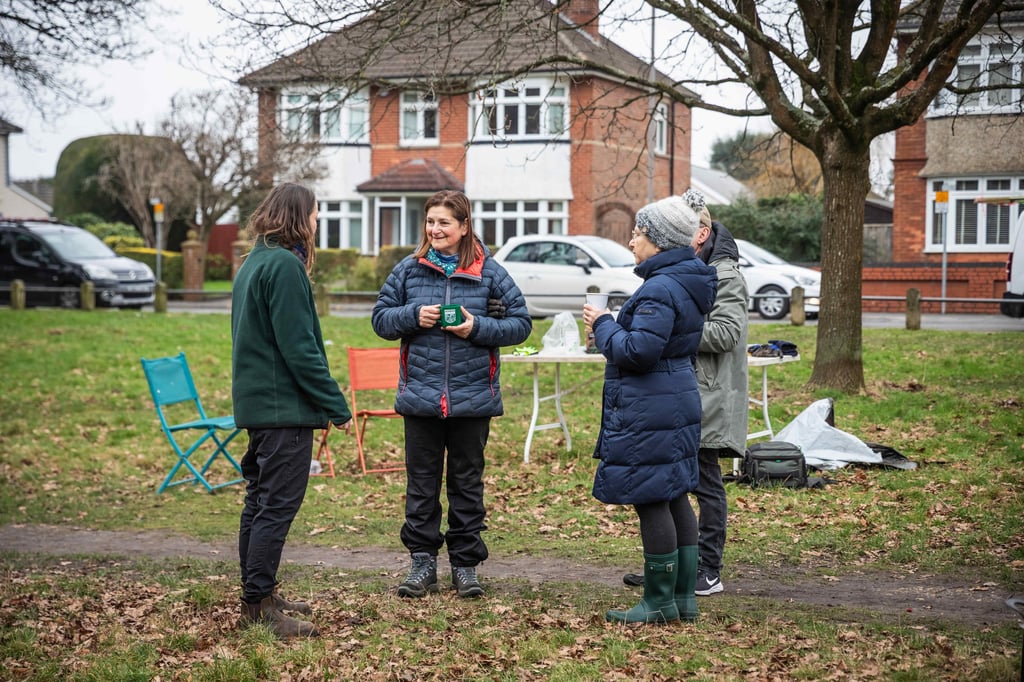
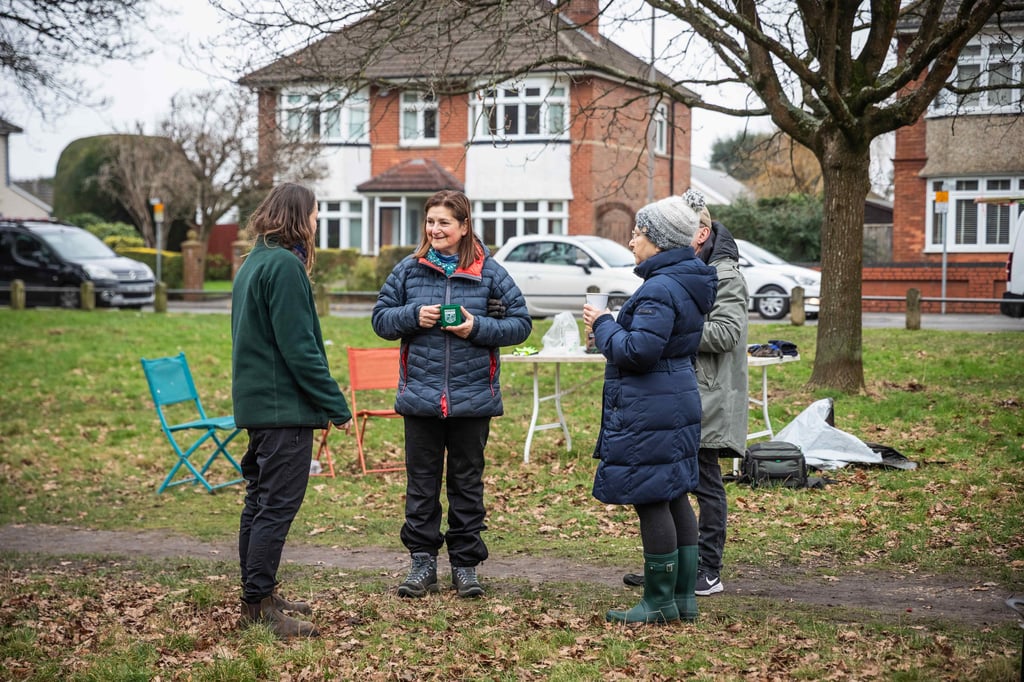
Above Community members have a chat during a tree-planting day at Redhill Park, Bournemouth
The Trust is calling for planning authorities to make use of new strategic planning powers to think holistically across towns and cities, finding the areas of public space that already exist and seeking to expand and enhance it. ‘We’ve seen it work in places like the Queen Elizabeth Olympic Park in East London, where the River Lea was cleaned up and used as a backbone for a joined-up network of green spaces,’ says Georgina. ‘They are cherished because they serve different community needs – whether for sport and exercise, children’s play, outdoor gatherings or gentler contemplation in nature.’
One Trust project seeking to move the dial is the 8 Hills Regional Park, between Birmingham and Bromsgrove. With the area facing growing pressure from both development and visitor numbers, the Trust is working with partners to join up green spaces, with future housebuilding contributing to their creation and upkeep.
‘This patch is pretty typical of lots of urban fringe landscapes, and we hope our plans can be replicated elsewhere,’ says Hannah Sargent, the Trust’s project lead. ‘We’re looking to link up public transport, walking, cycling and horse-riding routes so city folk can get into the outdoors, and we’re incentivising farmers to open new footpaths that will make it easier for people to access nature closer to home.’ The same thinking lies behind Nature Towns and Cities, a coalition launched by the Trust with Natural England and The National Lottery Heritage Fund, which aims to give 5 million more urban dwellers access to nature over the next decade.
For George, green planning begins on a small scale. ‘Nature should be hard-wired into everyday life, with green roofs, roadside rain gardens and vertical planting on the walls,’ he says. ‘We should have pocket wildflower meadows, beehives and allotments. If planners are worried about the long-term maintenance of green spaces, they should rally the community to help care for it. They’d rise to the challenge.’
He believes we should invest in developments that last, working with nature rather than against it. ‘That’s what I grew up with in Washington, and with the right ambition, it’s within our grasp today.’
Vincent Crump
is a journalist, writer, editor and editorial consultant.
National Trust Images, National Trust/Steve Sayers, National Trust/Trevor Ray Hart x2, Alamy, George Clarke

Contact us
General enquiries, including changing membership details:


0344 800 1895

Supporter Service Centre, National Trust, PO Box 7083, Stratford-upon-Avon, CV37 1XE

Leaving a lasting gift
Gifts in wills are vital to help us care for the places you love, from beautiful landscapes and coastline to historic properties. Every gift, no matter the size, makes a lasting difference in helping look after nature, beauty and history for future generations to enjoy.
Find out how to write or update your will using our free guide.
For everyone, for ever