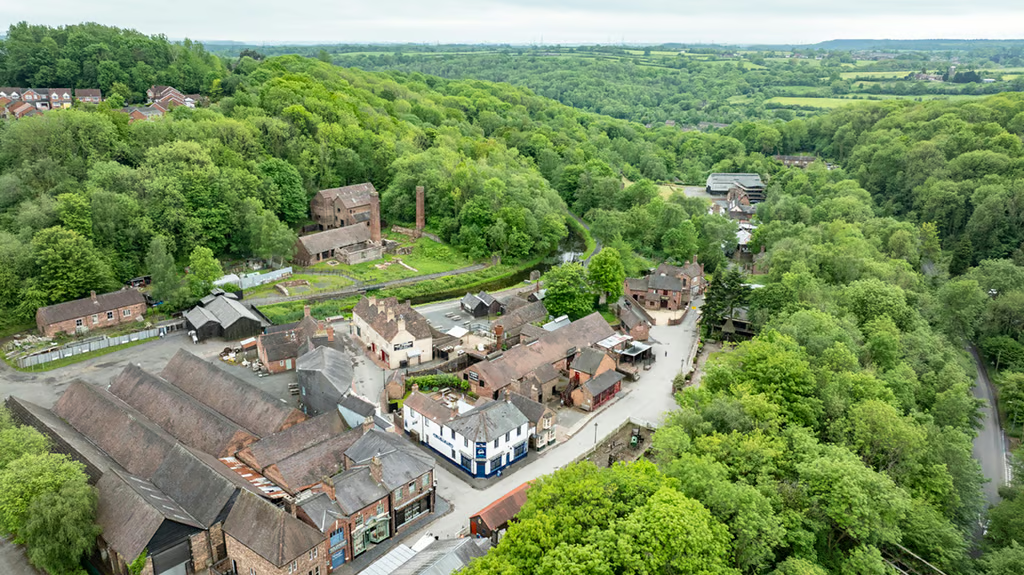
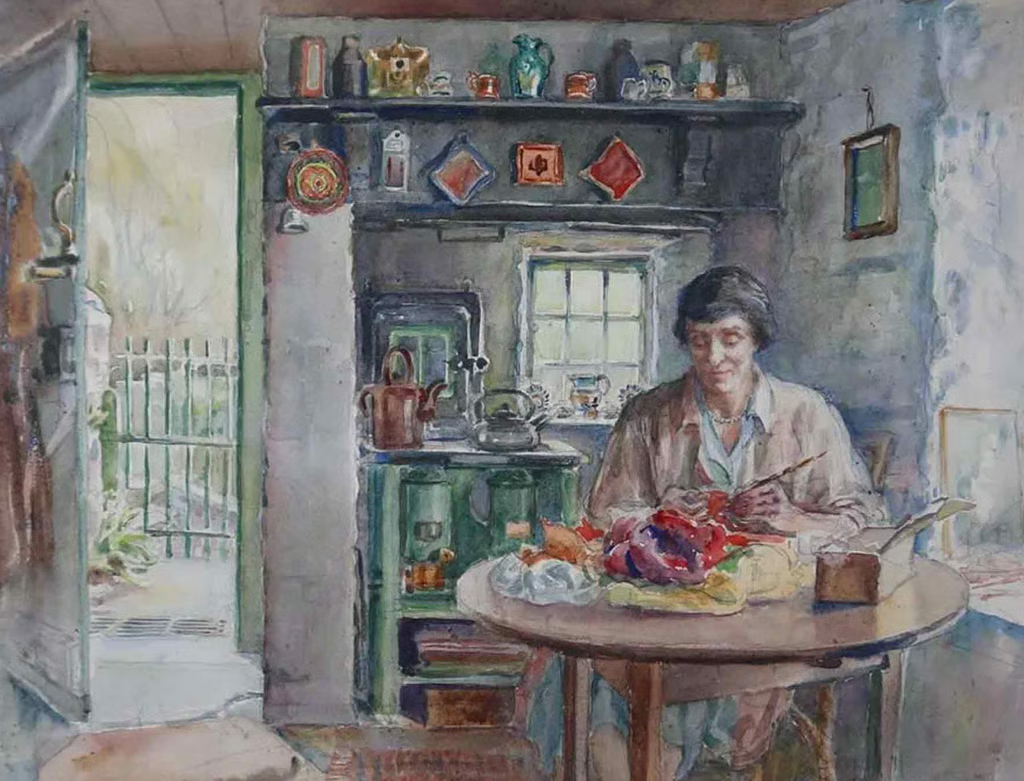
Open book
Explore Trust places where you can kick back with a book
Listen to this feature
As more Trust libraries encourage visitors to sit back and relax with a book, could they help halt the decline in reading for pleasure?
By Karen Gregory
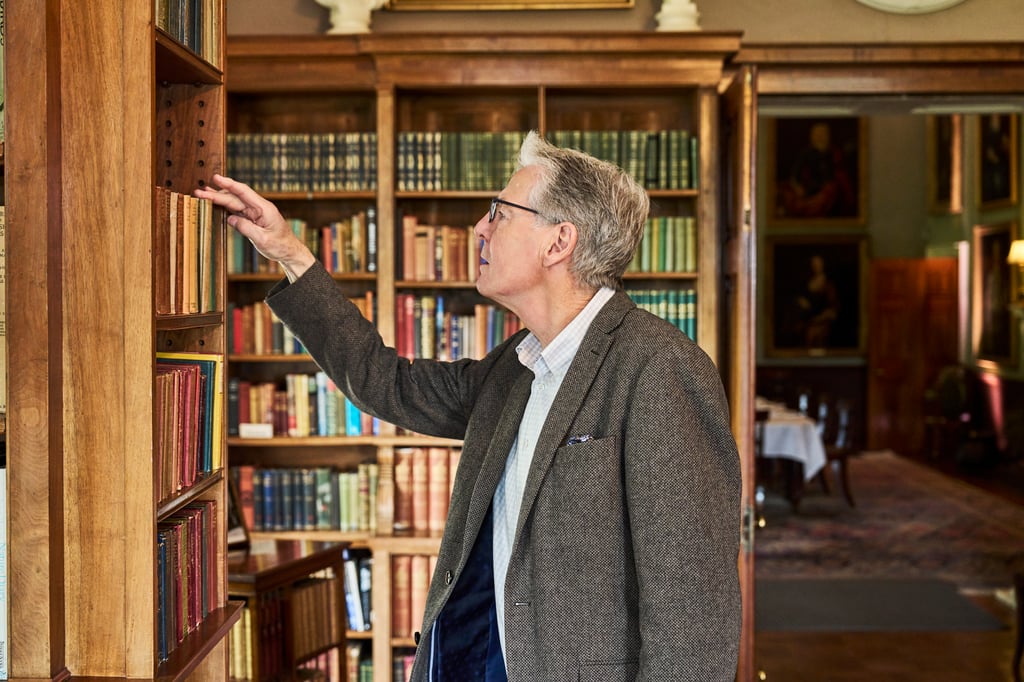
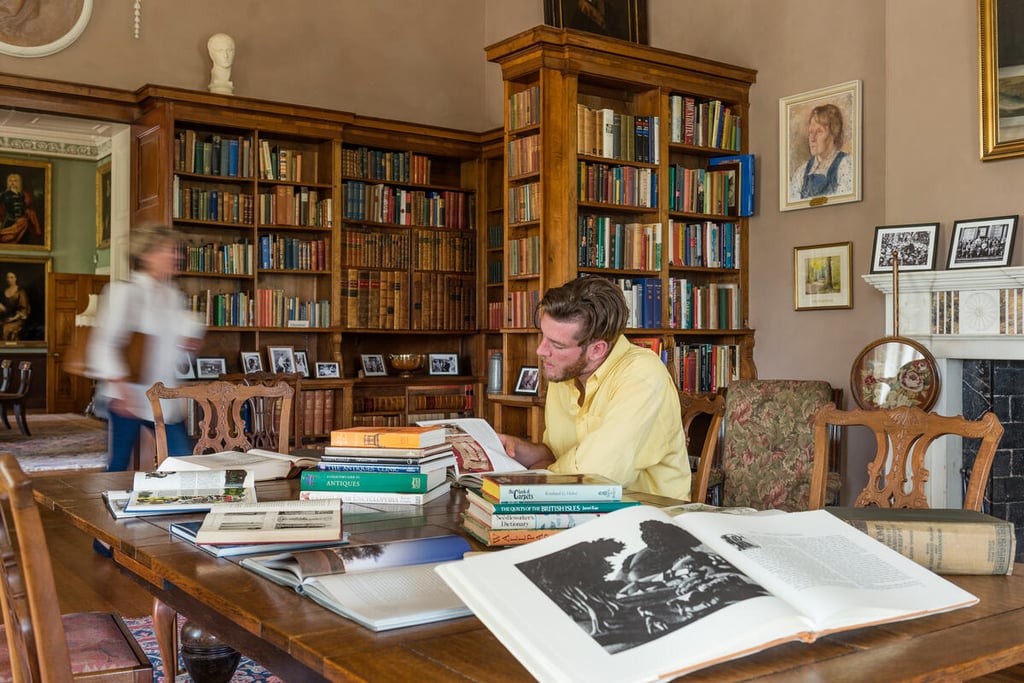
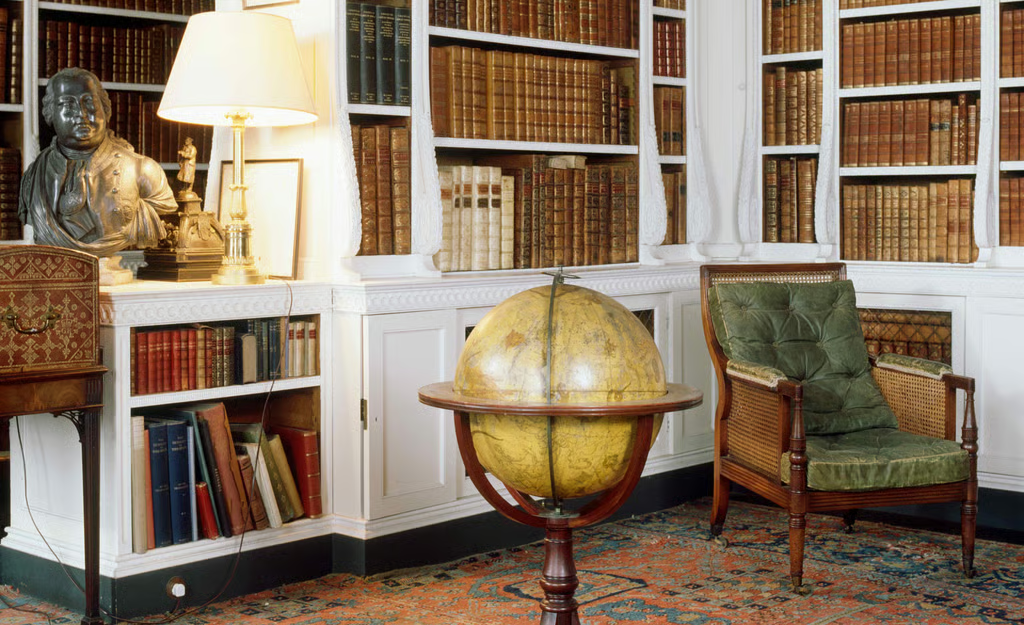
Above Visitors browsing well-thumbed books in the Library at Killerton, Devon

Above Perusing the shelves just like previous generations of the Killerton Acland family
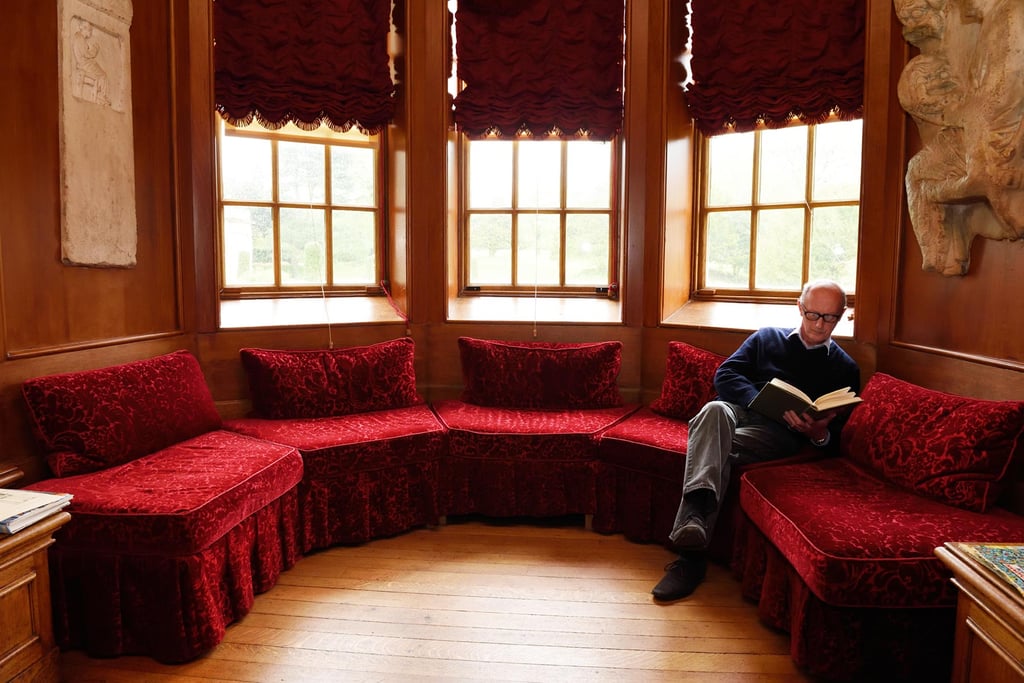
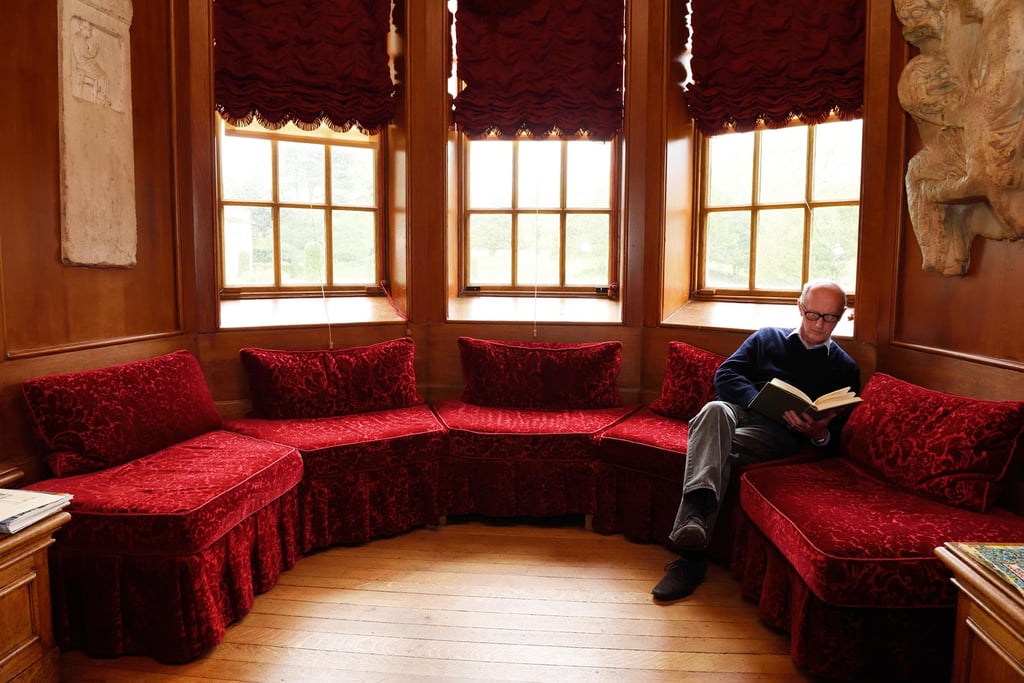
he armchair is comfy and piano music drifts in from the room next door as I lean back and leaf through a history of Britain. I’m in the Library at Killerton in Devon, and I’m feeling right at home.
Killerton’s one of an increasing number of Trust libraries where visitors are being encouraged to pause, relax and use the room as it was originally intended. Where possible, there’s a selection of books to browse – I’ve picked from a wide range of literature and history books here at Killerton. The plan is for more places to follow.
‘This library is so cosy,’ says Sarah Gooding, who has volunteered at Killerton for nine years. ‘People have fallen asleep in here because they feel so comfortable. They often tell me they’d love to have a library like this, so it’s great that they can share this one.’
The move towards opening up more Trust libraries is timely, as 2026 has been designated the National Year of Reading. The initiative, led by the Department for Education in partnership with organisations including the National Literacy Trust and The Reading Agency, aims to help tackle a sharp decline in reading for pleasure over the last 20 years. In 2025, only a quarter of boys and 39 per cent of girls aged 8 to 18 said they enjoyed reading for pleasure, while 35 per cent of adults surveyed by The Reading Agency in 2024 classed themselves as ‘lapsed readers’. The rise of smartphones, distractions from social media and a lack of time are all likely to be playing a role.
Given reading has so many proven benefits, from reducing stress and increasing empathy and the ability to experience others’ perspectives to helping children learn, its continued decline is a concern. Could Trust libraries play a role in helping people to discover or reconnect with the joy of reading?
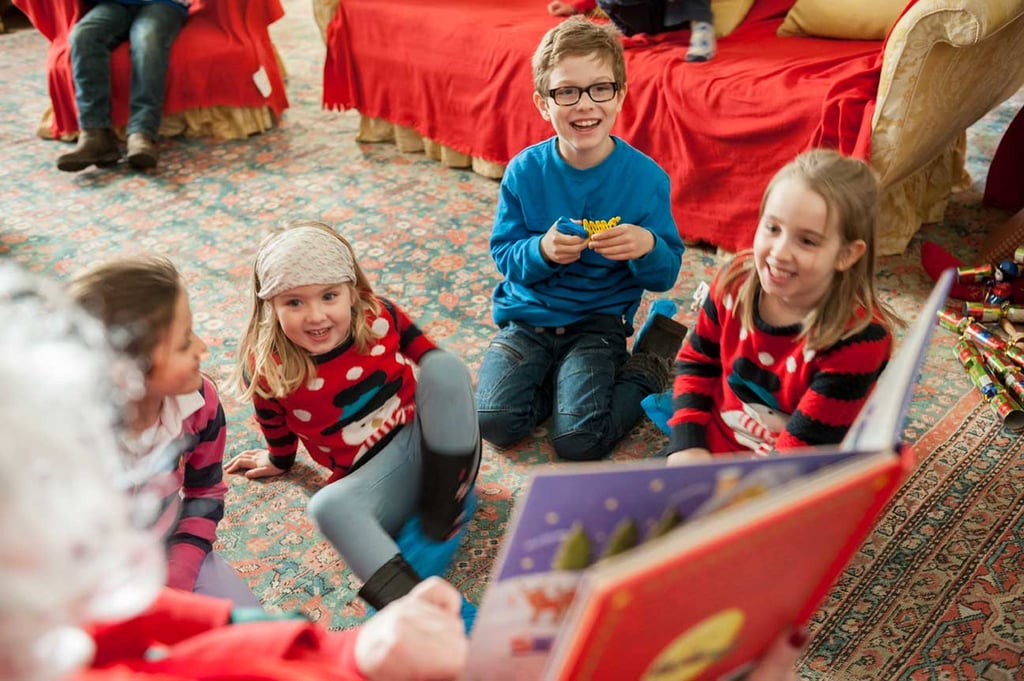
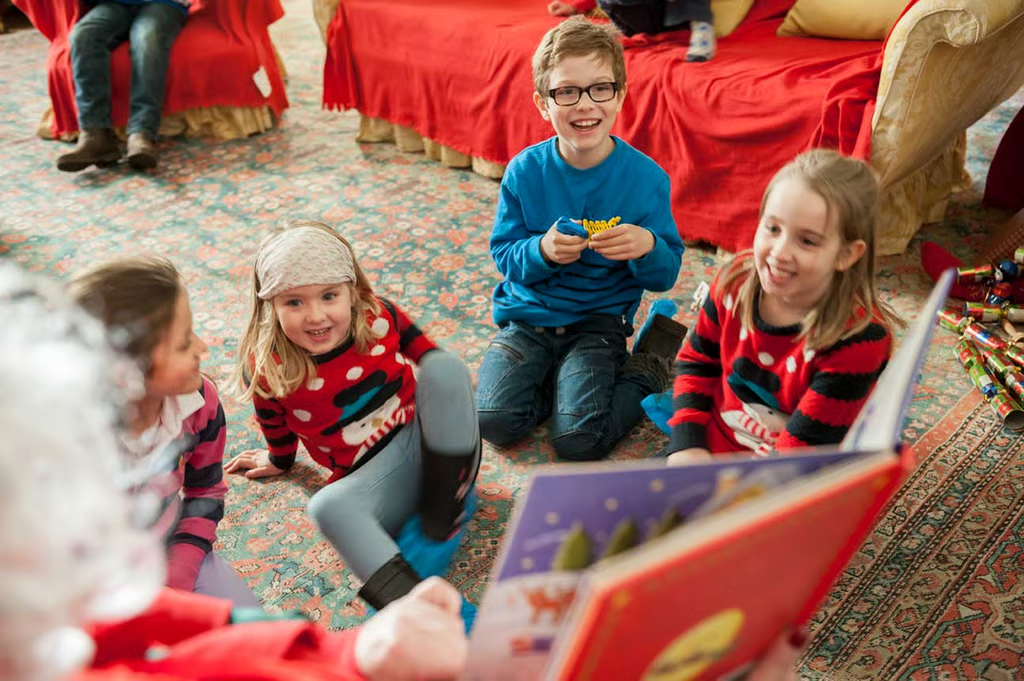
It seems so at Killerton. ‘We see families here introducing their children and grandchildren to books they might have read as a child, like the old Blue Peter annuals and selection of pocket-sized Observer’s Books, or sitting in the corner and reading together,’ says Sarah. ‘Other visitors might look at the shelves and think, “When was the last time I read a book?” We often point them towards the second-hand bookshop on the way out.’
Above The grand, yet cosy, Edwardian Library at Killerton
The hope is that such experiences can be repeated in more of the hundreds of other libraries in the Trust’s care. Killerton is one of around 200 Trust properties which together hold nearly half a million books and manuscripts. The collections include rare treasures such as the Sarum Missal, a prayer book printed by William Caxton in England in 1487 and on display at Lyme in Cheshire; the libraries of literary figures including Agatha Christie at Greenway in Devon; and the 20th-century book collection of poet, novelist and civil servant Khadambi Asalache at 575 Wandsworth Road, London.
Most of the Trust’s books are still in situ and often contain inscriptions or notes in the margins
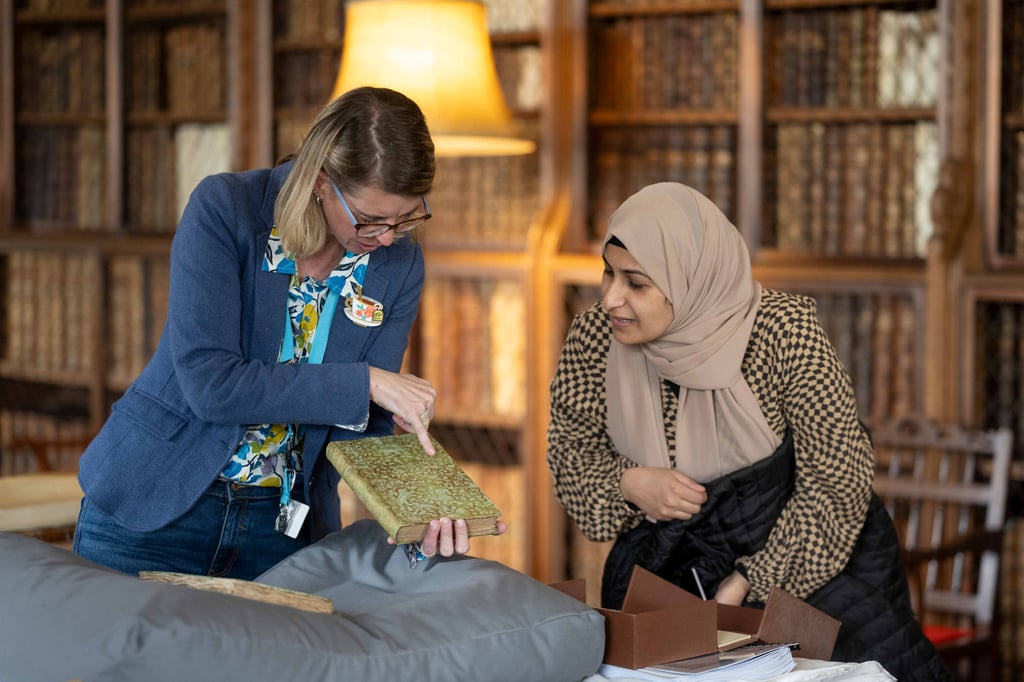
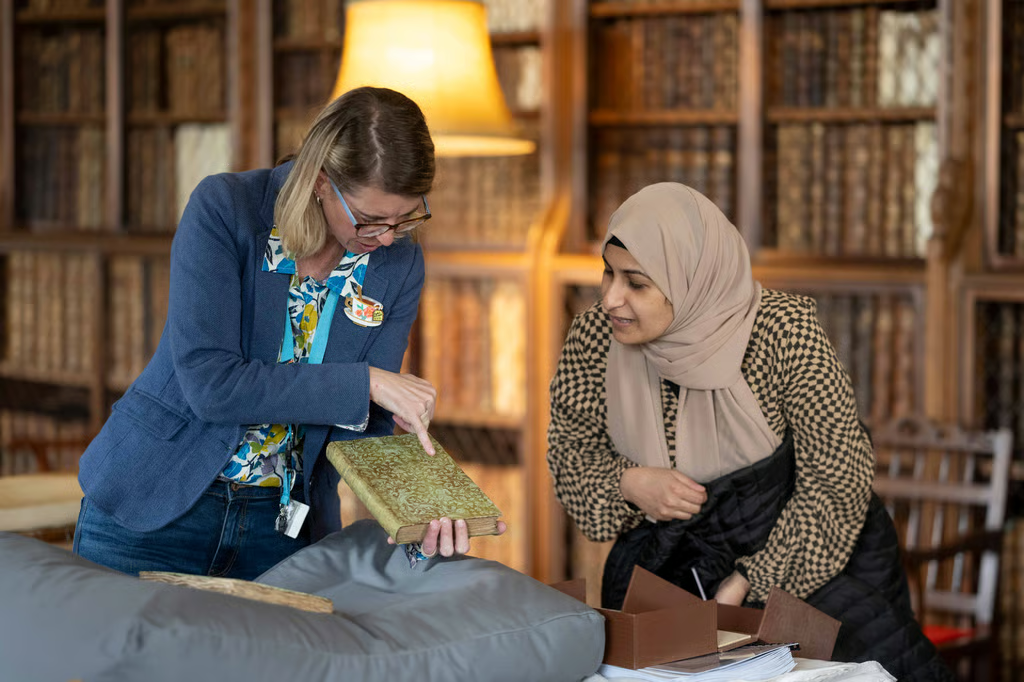
‘Books are the cornerstone of the Trust’s collections,’ says Tim Pye, the Trust’s National Curator of Libraries. ‘They aren’t “showy” in the way that perhaps paintings or furniture can be, and I think that makes it easier for people to relate to them. Unlike other libraries, most of the Trust’s books are still in situ and often contain things like inscriptions or notes in the margins. That means you haven’t lost that very personal connection with the stories of how people used, read and valued them. You can get right up close to the books at a Trust place, and I think that really helps people be inspired by the rich histories they can tell.’
These histories can be found in the grandest country houses and the smallest bookcases and help to tell the story of how reading and literacy developed across time. Large collections, like the 12,500 books and manuscripts at Blickling Hall in Norfolk, recall a time when only the wealthy could amass large quantities of books. They have plenty to tell about the lives and interests of this section of society, and how they used their books. At Killerton, for example, a music book owned by Lady Henrietta Mary Erskine was dedicated to her by George Marne, a little-known 18th-century musician in the 1790s, suggesting she was both his student and his patron.
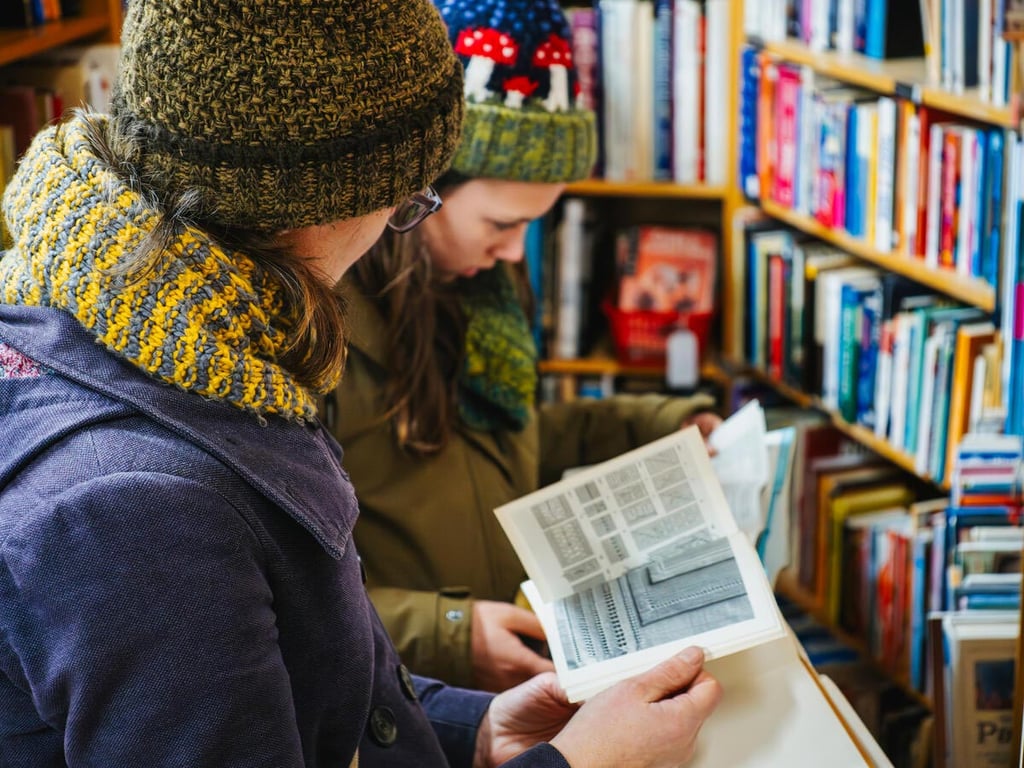
Above Engrossed in books that have been donated in the second-hand bookshop at Blickling, Norfolk
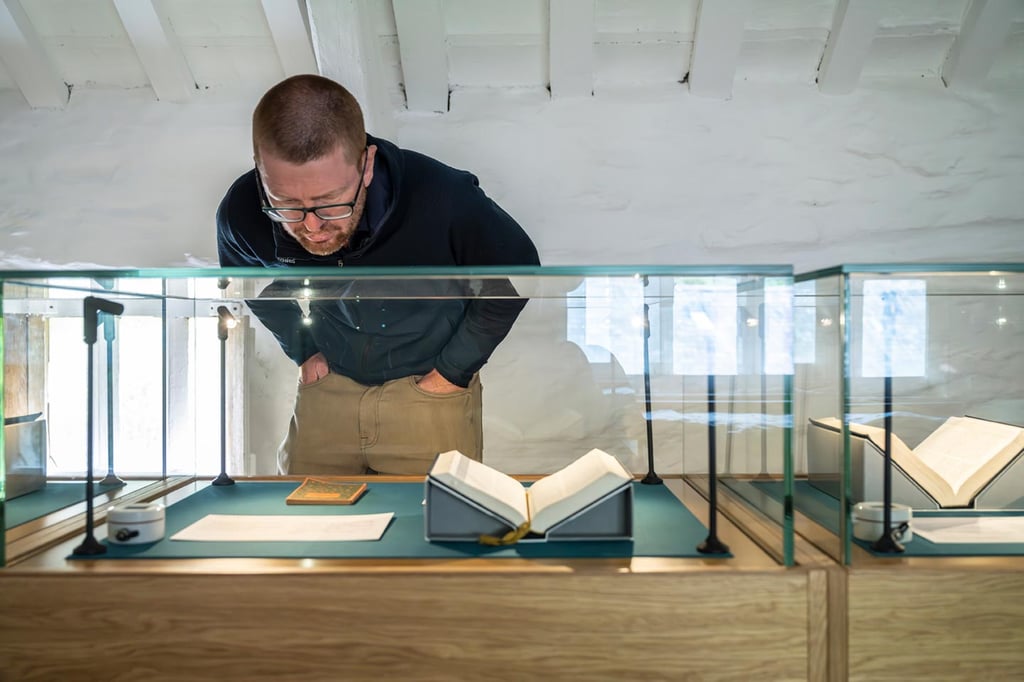
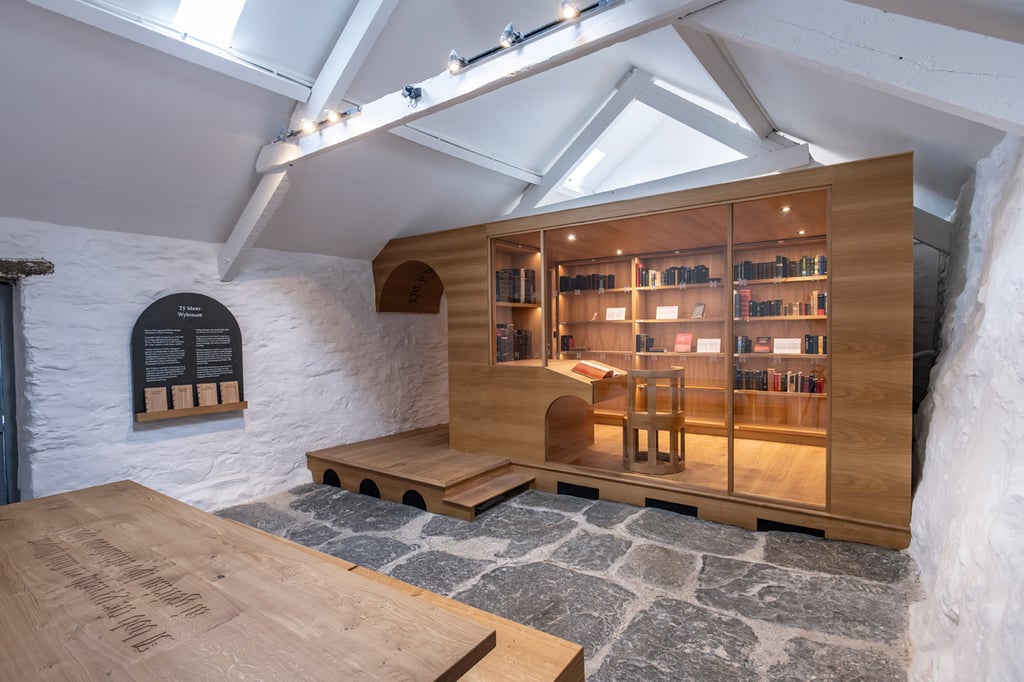
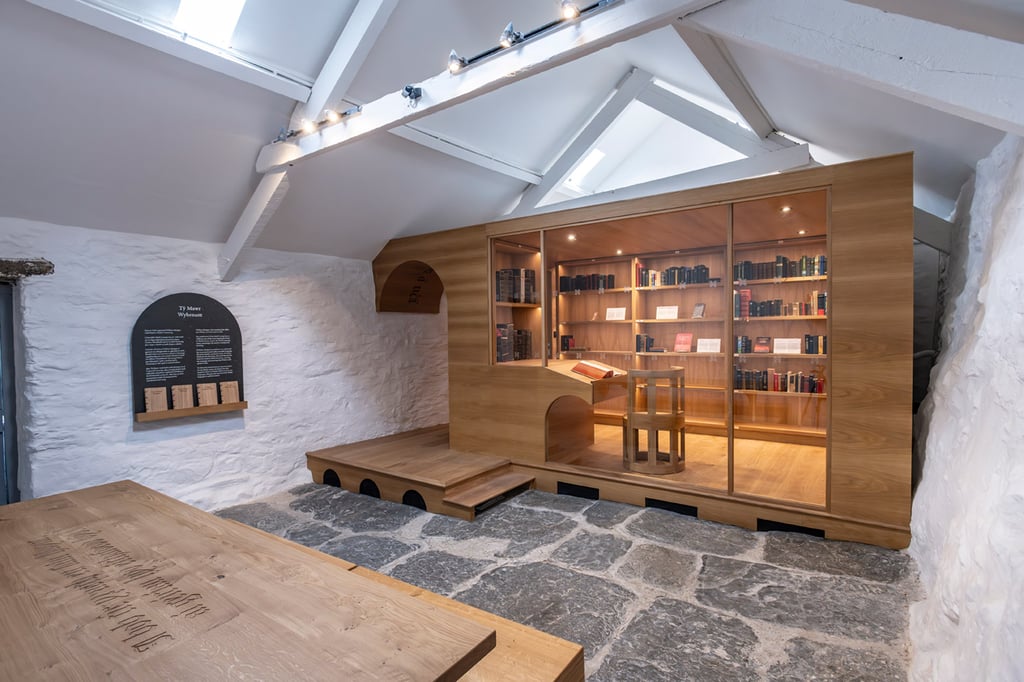
Right Taking a close look at bibles in different languages on display at Tŷ Mawr Wybrnant, Conwy
‘Occasionally you will find houses where there has been a bibliophile in the family who has gone out to find loads of really impressive books to put on their shelves, but the idea that books were “bought by the yard” simply to look good in the library is largely a myth,’ says Tim. ‘But I’d say the vast majority of the collections in Trust libraries are publications that people wanted to read to get information or enjoy for pleasure, just like we do now.’
It wasn’t only the wealthy elite who read and used the books in the Trust’s collections. At Townend in Cumbria, for example, the Browne family of yeoman (gentleman) farmers built a collection of around 1,500 books including novels, poetry and books on farming, religion, law and medicine. Many show signs of being well read, with turned-down pages, fingerprints and annotations in the margins. The collection also includes several bawdy ‘chapbooks’ – small, cheap volumes containing risque stories or crass humour, made to entertain members of the working class. They would have been sold door to door in the 18th century by ‘chapmen’.
By the 20th century, with the rise in subscription and public libraries and mass literacy achieved in the UK, books had become a major source of entertainment across the social spectrum. Cragside in Northumberland had a servants’ library of over 200 books, likely assembled between 1900 and 1920, provided for the domestic staff who lived there. Traces of servants’ libraries have also been found at Mottisfont in Hampshire and Baddesley Clinton in Warwickshire.
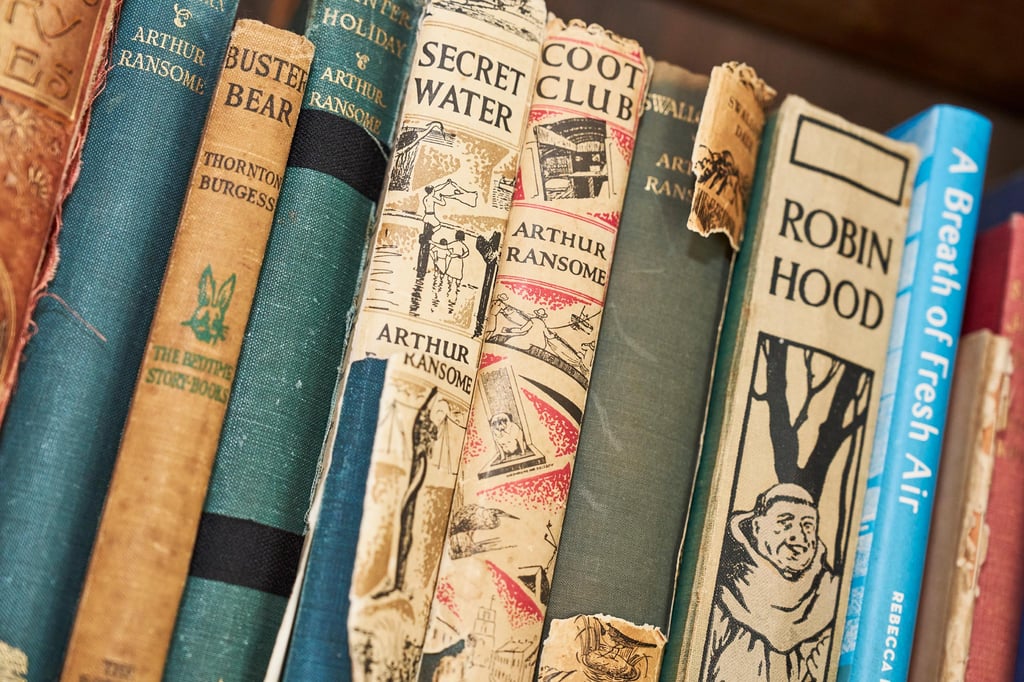

In 1900, a Workers’ Library was established at Quarry Bank in Cheshire, containing over 400, largely fiction, titles that workers could borrow for a small fee. From the records, it’s possible to piece together insights into the lives of the cotton workers, manual labourers, domestic servants, clerks and teachers who used it. Take Phoebe Whittaker, a 16-year-old cotton weaver, who read a wide range of fiction by authors such as Edna Lyall, a bestseller of her day. The records show Phoebe often borrowed the same books as another 16-year-old, Lily Bone. Perhaps they were friends or visited the library together? Another young borrower, a clerk called Ezra Tunnicliffe, seems to have preferred adventure stories and books with heroes like Baroness Orczy’s The Scarlet Pimpernel. Ezra’s lending record stops in 1914 when he became a private in the army, but later records show he survived the war. Today, visitors can see a selection of books from the Workers’ Library on display at Quarry Bank, helping to paint a vivid picture of working life in an early 20th-century industrial community.

Above Selecting a book to read in the library at Killerton
These hugely varied libraries and collections tell stories of people who, regardless of background or time, had that same need for storytelling and knowledge we can look for in books today. Despite concerns about the decline of reading, the Publishers Association says publishing continued to grow in 2025, with total publishing revenue standing at £7.4bn. The Trust itself publishes around 25 beautifully illustrated non-fiction books each year, including children’s books, guidebooks and books on nature, heritage, gardening, walking and travel. And, of course, there’s the rise of the BookTok community on the social media platform TikTok, and the growth in audiobooks over recent years. Maybe what we are seeing is simply another evolution in the long history of reading.
‘We’re thinking about how we can responsibly make that leap from people being able to browse and get up close to the books, to actually getting them off the shelves,’ says Tim. ‘Back in 1909, when the very first books were brought into the Trust’s care at Coleridge Cottage in Somerset, the idea was that it would be a place for people to go and enjoy reading. We’re still grappling with the balance between access and conservation, but we’re working towards curators being able to identify books which could withstand more use so that we can bring them off the shelves for people to look at. We’ve also trialled digital solutions where people can “virtually” pick a book up at places like Wimpole in Cambridgeshire.’
Back in Killerton’s Library, I can sense the generations of the Acland family who once lived here. Perhaps Sir Richard Acland, who, in line with his political principles, passed on Killerton to the Trust for everyone to enjoy, is reading over my shoulder? ‘I think he’d have been delighted to see people still reading here,’ Sarah says.
The history of reading and books is long, but I’m excited for the next chapter.
Karen Gregory
is an author, writer and part of the National Trust Magazine team.
Stop, read, relax
Discover more Trust places where you can kick back with a book
Belton House,
Lincolnshire
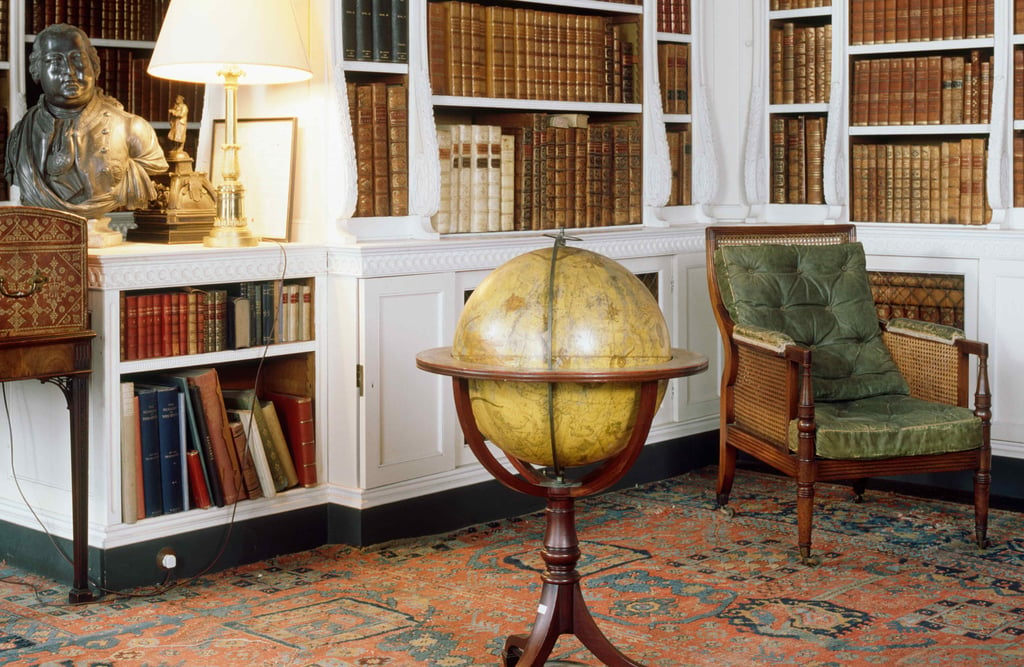
Relax on comfy sofas and armchairs with cushions and blankets and a selection of books to read in Belton’s Library. Watch out for Book Discovery Days, where books from the collection are laid out for visitors to enjoy up close with conservation volunteers and partners from the University of East Anglia.


Blickling Hall,
Norfolk
Blickling Hall’s collection of around 12,500 books is one of the largest in the Trust’s care. Today visitors can wander along the book-lined Long Gallery, or stop and relax on cosy sofas where a selection of books is usually available to read in peaceful, distraction-free surroundings.


1/2

National Trust Images x7, National Trust/Steve Sayers

Contact us
General enquiries, including changing membership details:


0344 800 1895

Supporter Service Centre, National Trust, PO Box 7083, Stratford-upon-Avon, CV37 1XE

Leaving a lasting gift
Gifts in wills are vital to help us care for the places you love, from beautiful landscapes and coastline to historic properties. Every gift, no matter the size, makes a lasting difference in helping look after nature, beauty and history for future generations to enjoy.
Find out how to write or update your will using our free guide.
For everyone, for ever